|
|
Protecting The Dedham Vale |
|
|
Protecting The Dedham Vale |
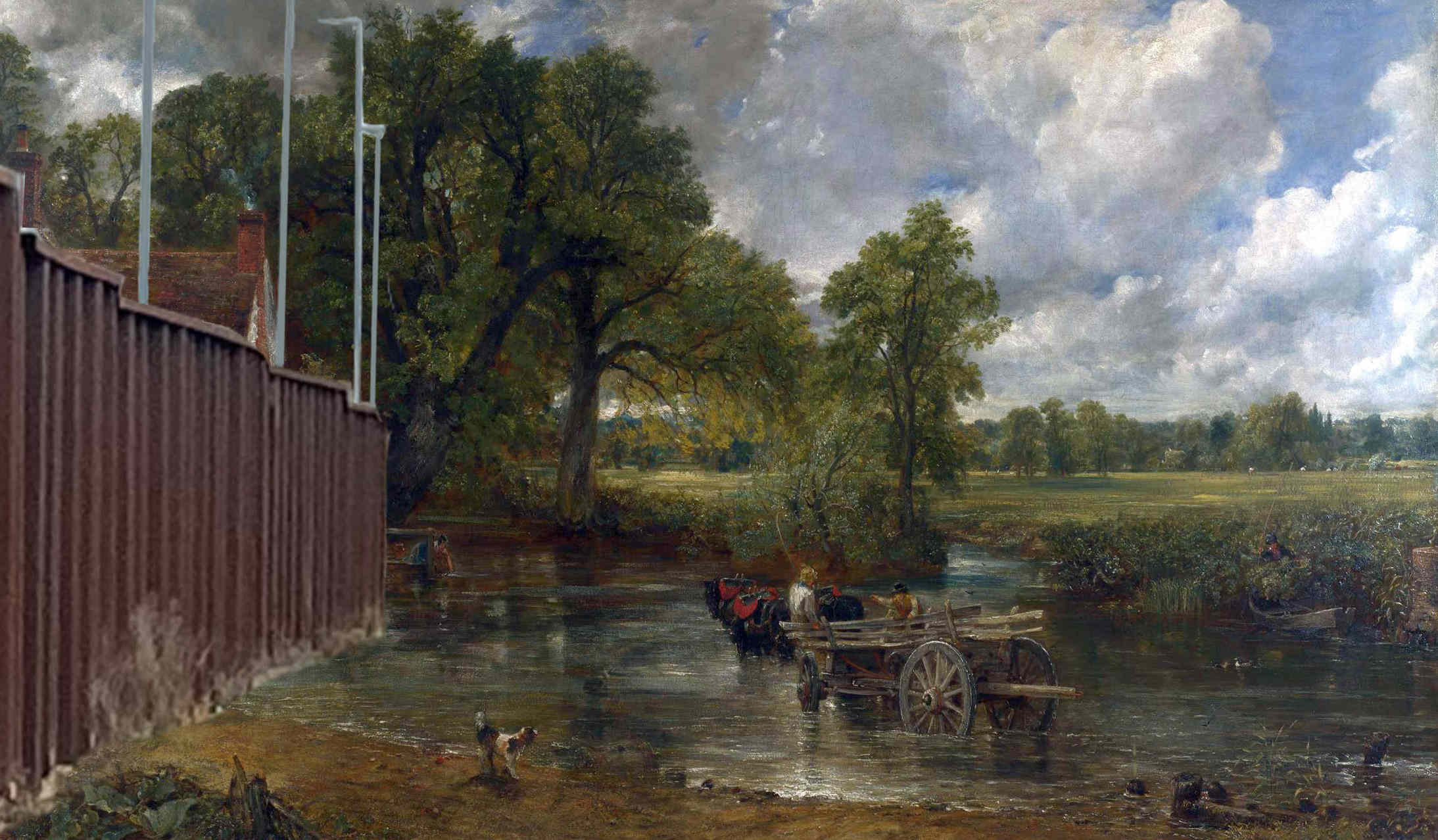
Until five and a half years ago Manningtree station announced itself by an avenue of poplar trees. Step off the train, cross the station car park & turn right you would be at the foot of one of the most celebrated walks in natural England, starting through the poplars & heading towards the heart of the Dedham Vale. Not far along the River Stour when the scene becomes remarkably familiar you might stop. You could be standing on the very spot John Constable set up an easel to paint his masterpiece 'The Hay Wain'.
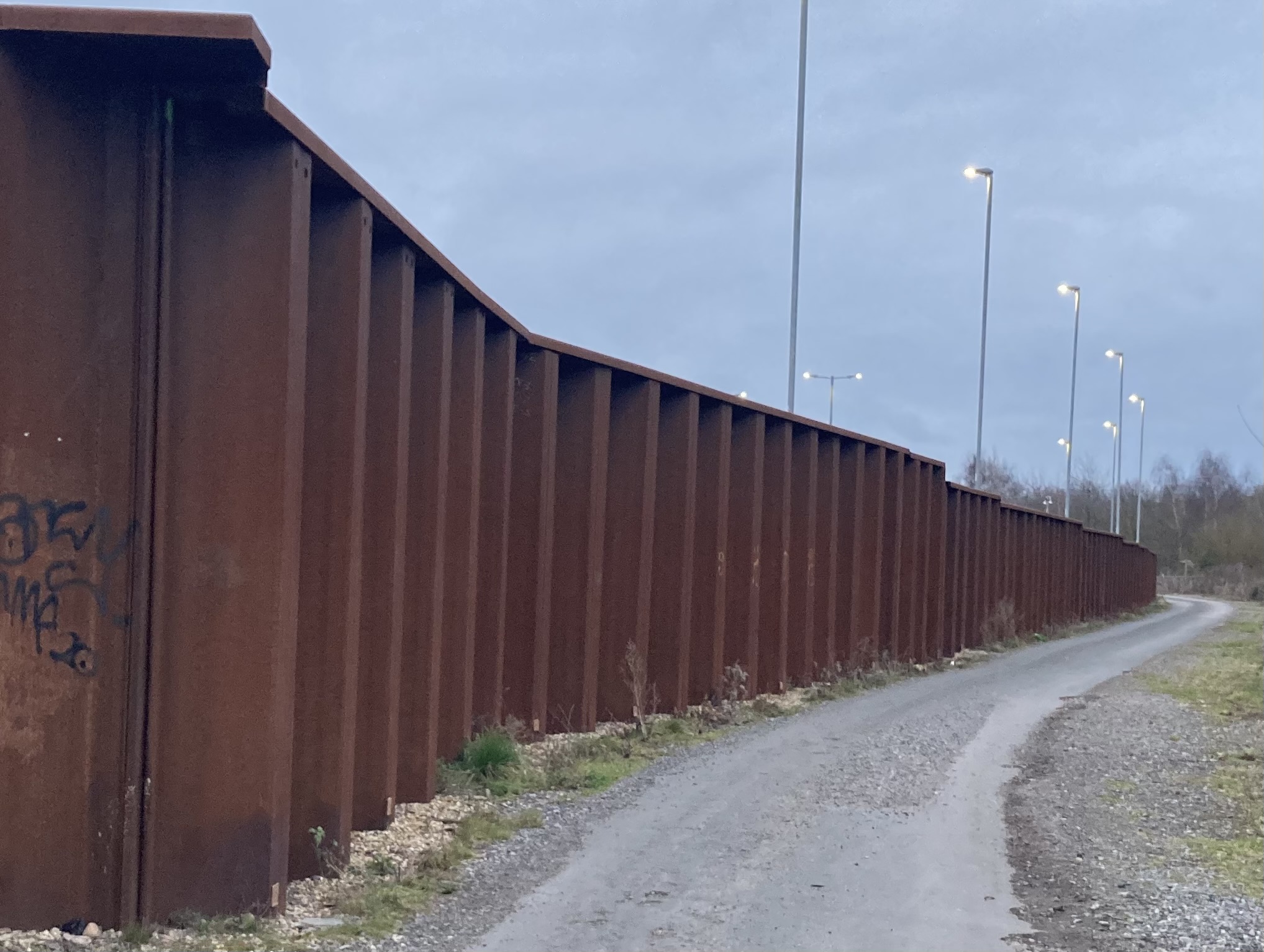
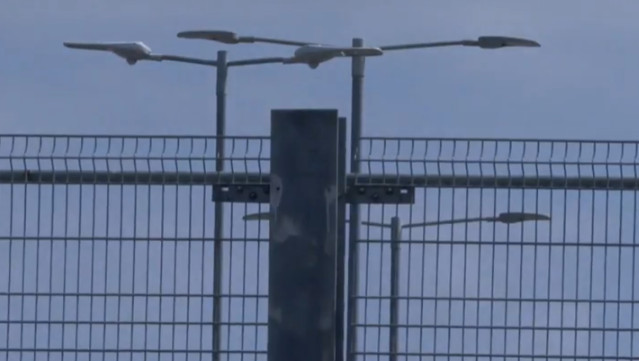
The experience starts differently today. The poplars have been felled. And, to expand the car park, the adjacent sloping bank has been levelled with infill buttressed by a 190m sheet metal wall up to 4m tall. CCTV cameras watch. Darkness triggers a sharp white light that can be seen from miles around. This is no gateway to Dedham Vale. This is gateway to Guantanamo Vale.
The Dedham Vale is a 'legally protected'
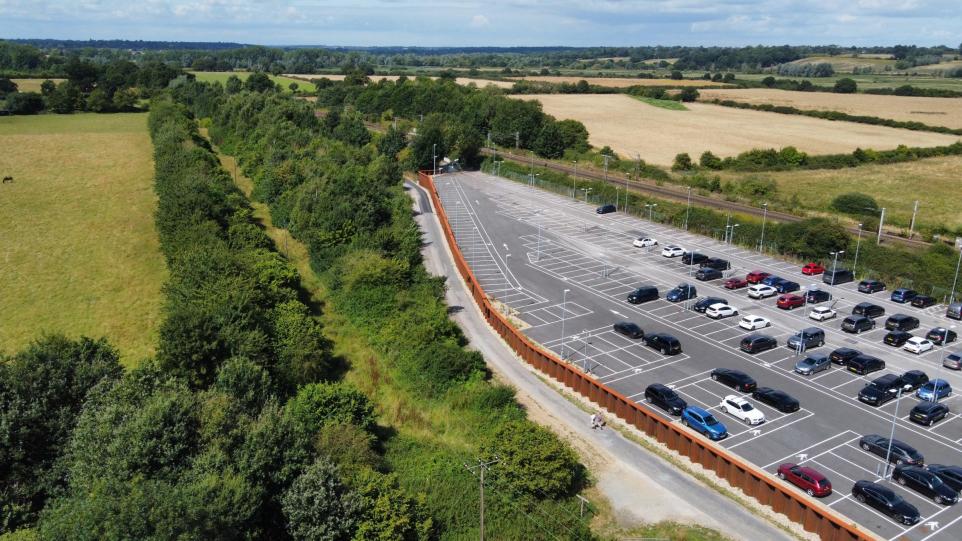

We are individuals from Manningtree, Essex, who, until March 2020, were privileged to enjoy the sanctuary of an 'Area of Outstanding Natural Beauty' (AONB) on our doorstep. However, while COVID ripped through the UK, a giant metal wall & car park ripped through our 'protected' sanctuary. How was this allowed to happen?
This is our attempt to explain (and, especially for the attention of Sir Bernhard Jenkin MP, to highlight the effect on a local running sore: traffic congestion).
We are not legal experts but members of the public who have invested considerable time to understand certain elements UK planning law. In doing so we have learnt that the devastation brought upon Manningtree & the Dedham Vale has come about through a subtle misrepresentation of this law (in bad faith). Read on. We hope that this resource will be interesting, relevant & helpful to those like us.
We'd very much like to learn your views & experiences.
Click here to email
Planning advisor to Greater Anglia, Mott MacDonald Ltd, wrote a
provide details of the development proposals and seek confirmation from Tendring District Council ('the LPA' hereafter) that an extension to the existing ground level car park is
The letter reminds the Council of the following planning law:
'Development by railway undertakers on their
In other words planning law permits Greater Anglia to develop on its station 'operational land' without planning permission. Providing a case can be made for development in connection with what one would typically expect at a railway station Greater Anglia can do more or less whatever it wants on such land.
Mott Macdonald goes on to claim that the development plot at Manningtree Station is operational land.
But is it?
The two subsections making up
Subsection 1 determines that it might be operational, and
So Mott MacDonald claims that its client's development plot is operational while Section 263 of the Town & Country Planning Act determines that it is not. How then does Mott MacDonald back up its claim?
Buried within its near 2,000 word letter, Mott MacDonald:
Taking on permitted development rights Greater Anglia built at Manningtree Station, including
In March 2020 Greater Anglia sent a very similar
Again, buried in just under 2,000 words, Greater Anglia misquotes Section 263 Subsection 1 & ignores Section 263 Subsection 2. It then draws on the resulting text in support of its claim that Brandon Station development plot is operational land.
Again, the planning authority - Breckland District Council this time - failed to notice anything wrong with the letter and decided that the scheme is permitted development.
However, taking Breckland's decision to the High Court, SAVE Britain's Heritage claimed that Breckland District Council had failed to consider lawfully whether the car park was entirely on operational land. The Council had failed to consider Section 263 subsection 2 of TCPA.
The High Court agreed. See Dad's Army station saved from bulldozers.
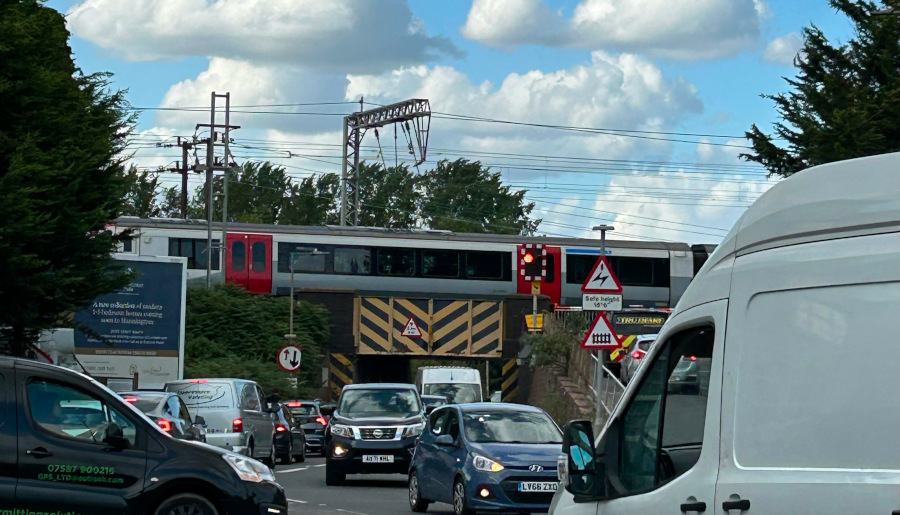
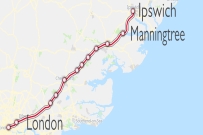
All station traffic to & from Suffolk (including Ipswich) passes through a single lane underpass (or negotiates the level crossing to its east). Commenting before the near 40% percent increase in station car park capacity, Cllr Carlo Gugliemi labelled it 'the worst bottleneck in Essex'.
Sir Bernhard Jenkin MP posts on his website:
For years now, I have been pushing for progress to rectify the insufferable traffic issues, alongside Cllr Carlo Guglielmi, Tendring Councillors, and my colleague James Cartlidge MP, who represents the Suffolk side of the Stour
and
There is understandable irritation amongst residents who are often caught in the jams that is so often backed up through the town
and
Progress has been slow and it is a harder nut to crack than many of us had hoped.
and
We cannot simply wait for improvements while residents are left with this intolerable situation, especially at rush hour. I convened a task force with Cllr Guglielmi to get to grips with this issue once and for all, and it remains one of my top priorities to see fixed.
August 2025
Dear Sir Bernhard,
Please be aware that between the time you posted the above & COVID shut down station traffic the problem merely got worse.
London commuters are now returning & those insufferable traffic issues that you refer to are also returning. The only difference between then & now is that station car park capacity is nearly 40% greater (and thousands of new homes straddle the underpass). Your term 'irritation amongst residents' does not begin to reflect the mood amongst residents.
This is, as you must surely know, a ticking traffic time bomb.
It has been over five years since you posted the above. You have made the issue an election pledge. Is it still one of your 'top priorities to see fixed'?
Yours sincerely,
A number of your constituents
In a pre-works
operating over-capacity hence a car park expansion Scheme is required
London commuters are sucked in to Manningtree station from Ipswich (& all over Suffolk) by finacial incentives to use the station. (Two examples are below.) No financial incentives, no need to expand the car park.
| Ipswich Station | Manningtree Station | |
| Annual rail pass to London | £8,592 | £7,488 |
| Season parking ticket | £2,850 | £2,020 |
Of course Greater Anglia can attempt to solve its supply & demand problem (see below) as it wishes. But 'Greater Anglia' should pay. Not Manningtree & the Dedham Vale.
(Ipswich - Manningtree: 11 miles)
Greater Ipswich population: 139,638
Ipswich Station parking spaces: 494
Greater Manningtree population: 8,619
Manningtree Station parking spaces: 836